Style Guides
What to Wear to an African Wedding in the UK: A Complete Style Guide (2026)
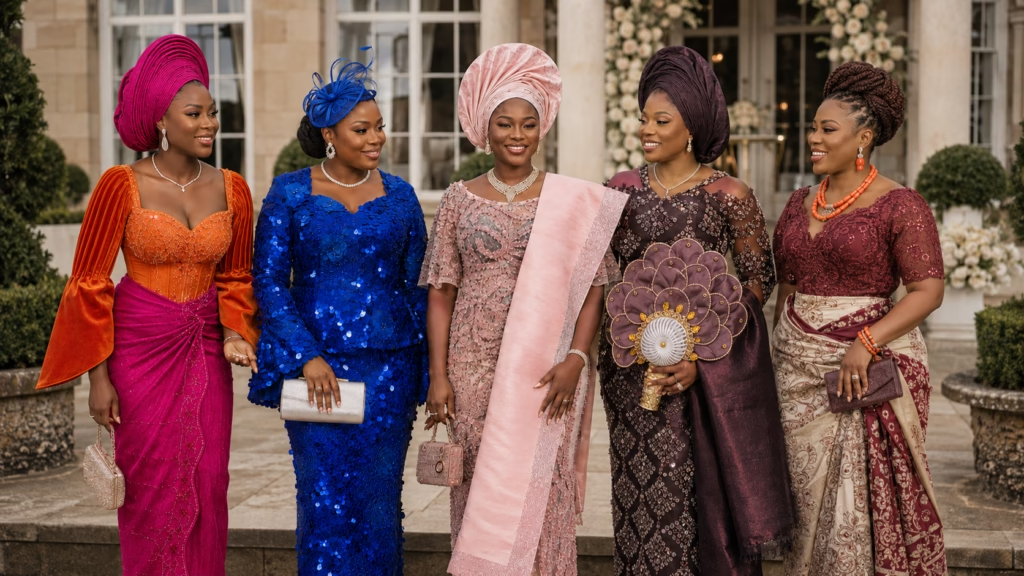
An invitation to an African wedding often comes with one exciting question: what am I going to wear?
From Nigerian and Ghanaian celebrations to weddings across the wider African diaspora, African weddings in the UK are known for bringing together family, culture, fashion and celebration in spectacular ways. Depending on the couple, you might be attending a traditional ceremony, a white wedding, an evening reception or all three.
And the dress code can be just as varied.
You may be asked to wear Aso Ebi, traditional attire, a particular colour or formal eveningwear. Or the invitation may simply leave you wondering how dressed-up is dressed-up enough.
Whether this is your first African wedding or your calendar is already full of owambes, this guide will help you understand the dress code, choose the right colours and fabrics, accessorise thoughtfully and find an outfit that allows you to celebrate in style.
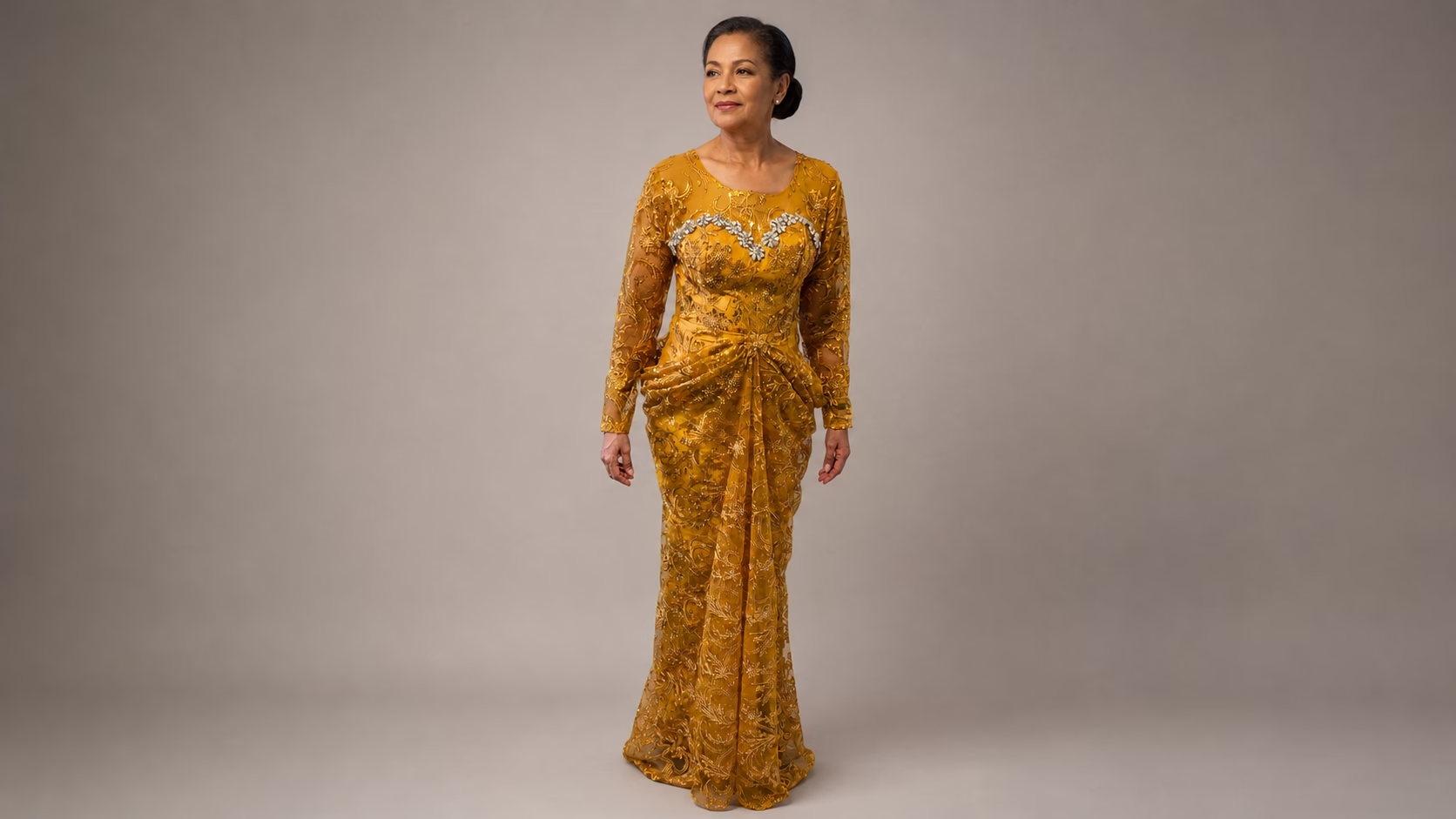
What Should You Wear to an African Wedding in the UK?
The first rule is simple: read the invitation.
African weddings are not one-size-fits-all, and traditions vary significantly between countries, cultures, families and even individual couples.
Some celebrations are centred around traditional attire. Others combine cultural dress with contemporary fashion, while a formal white wedding may call for elegant Western-style occasion wear.
Your invitation may specify:
- Aso Ebi
- Traditional attire
- A particular colour palette
- Formal or black tie
- Cocktail attire
- Smart occasion wear
If a dress code has been provided, use that as your starting point.
When no specific guidance is given, elegant occasion wear in beautiful fabrics and thoughtful colours is generally a strong choice.
Understanding the Dress Code
What Does Aso Ebi Mean?
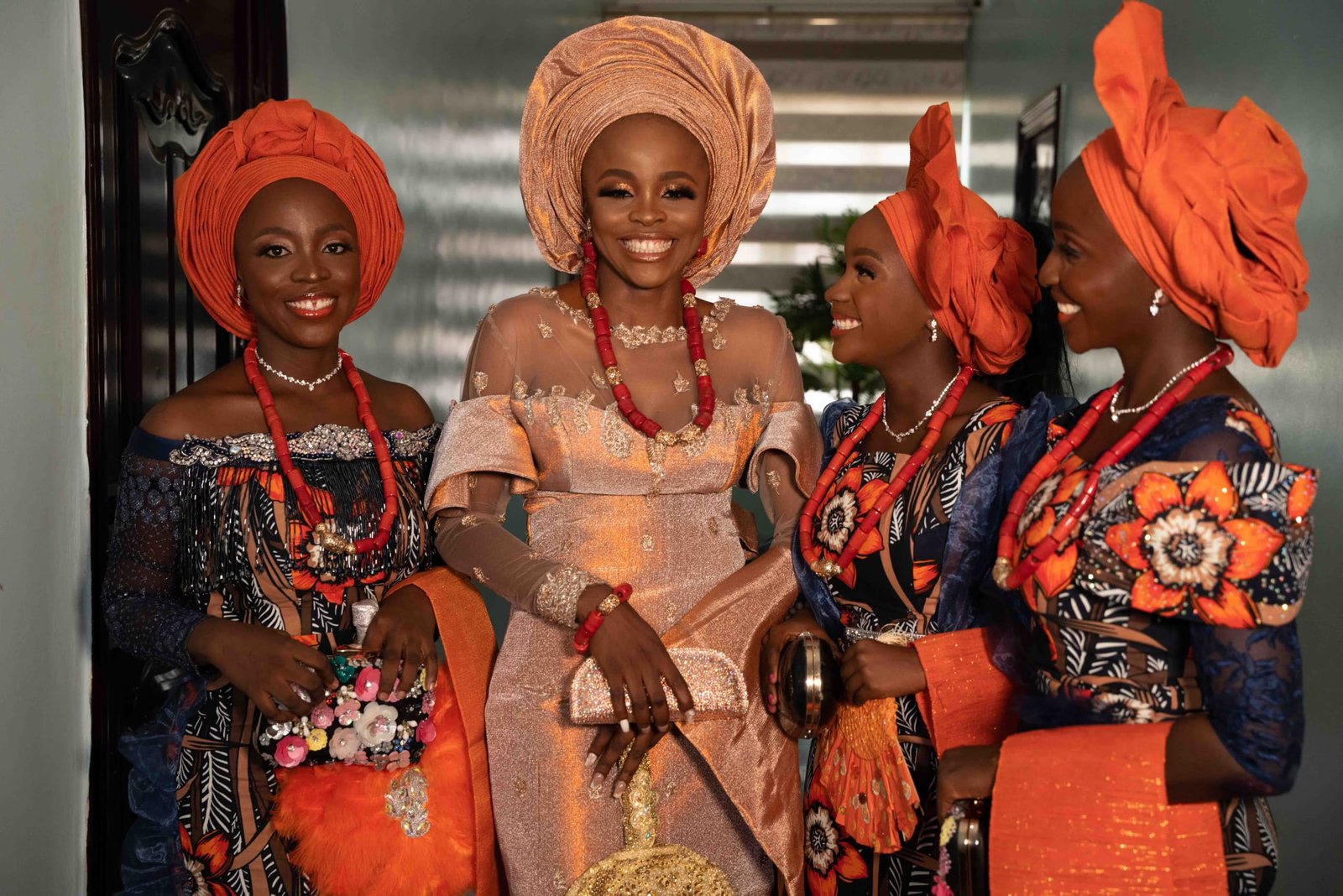
If you’re attending a Nigerian celebration, particularly a Yoruba wedding, you may encounter the term Aso Ebi.
Aso Ebi roughly translates to “family cloth” and refers to coordinated fabric or colours worn by groups of family members, friends or supporters at an occasion.
The couple or their families may select a particular lace, Ankara, Aṣọ̀-Òkè, colour or other textile for guests within a particular group.
If you have been given Aso Ebi fabric, you can usually have it transformed into an outfit that reflects your personal style while respecting any guidance provided by the hosts.
This is where bespoke tailoring can be particularly valuable: the same fabric can become a fitted gown, dramatic bùbù, iro and bùbá, contemporary dress or another silhouette entirely.
What Does Traditional Attire Mean?
Traditional attire provides an opportunity to celebrate heritage through clothing, but exactly what is appropriate will depend on the culture represented at the wedding.
For Nigerian celebrations, for example, you may see:
- Iro and bùbá
- Bùbùs
- Kaftans
- Lace dresses
- George wrappers
- Aṣọ̀-Òkè
- Agbada
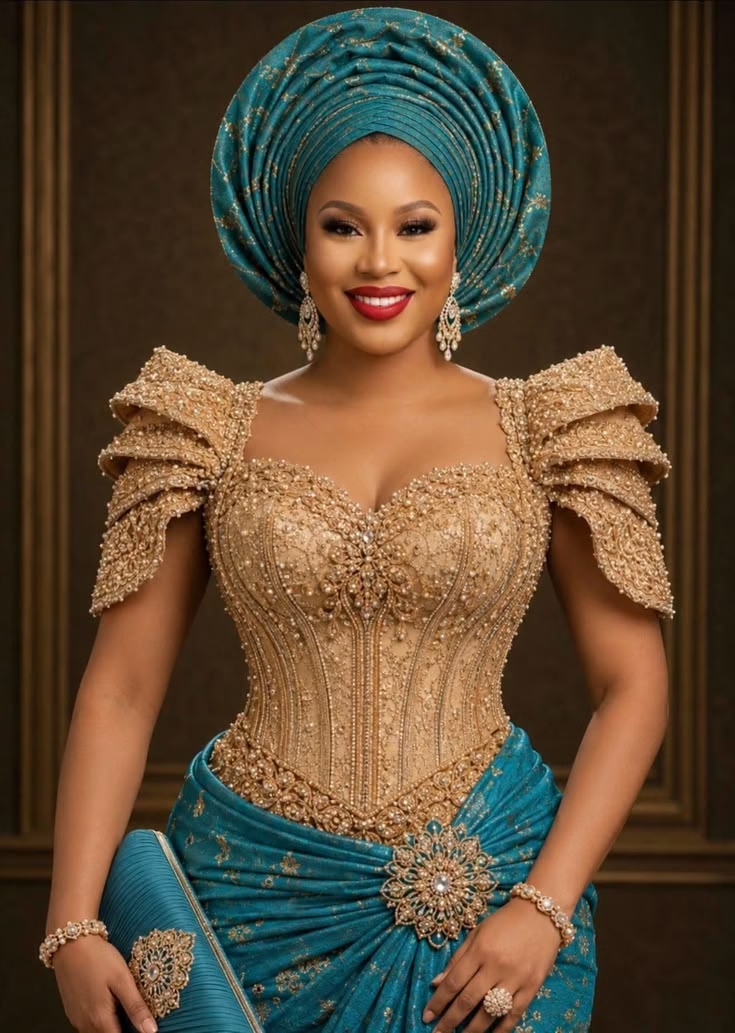
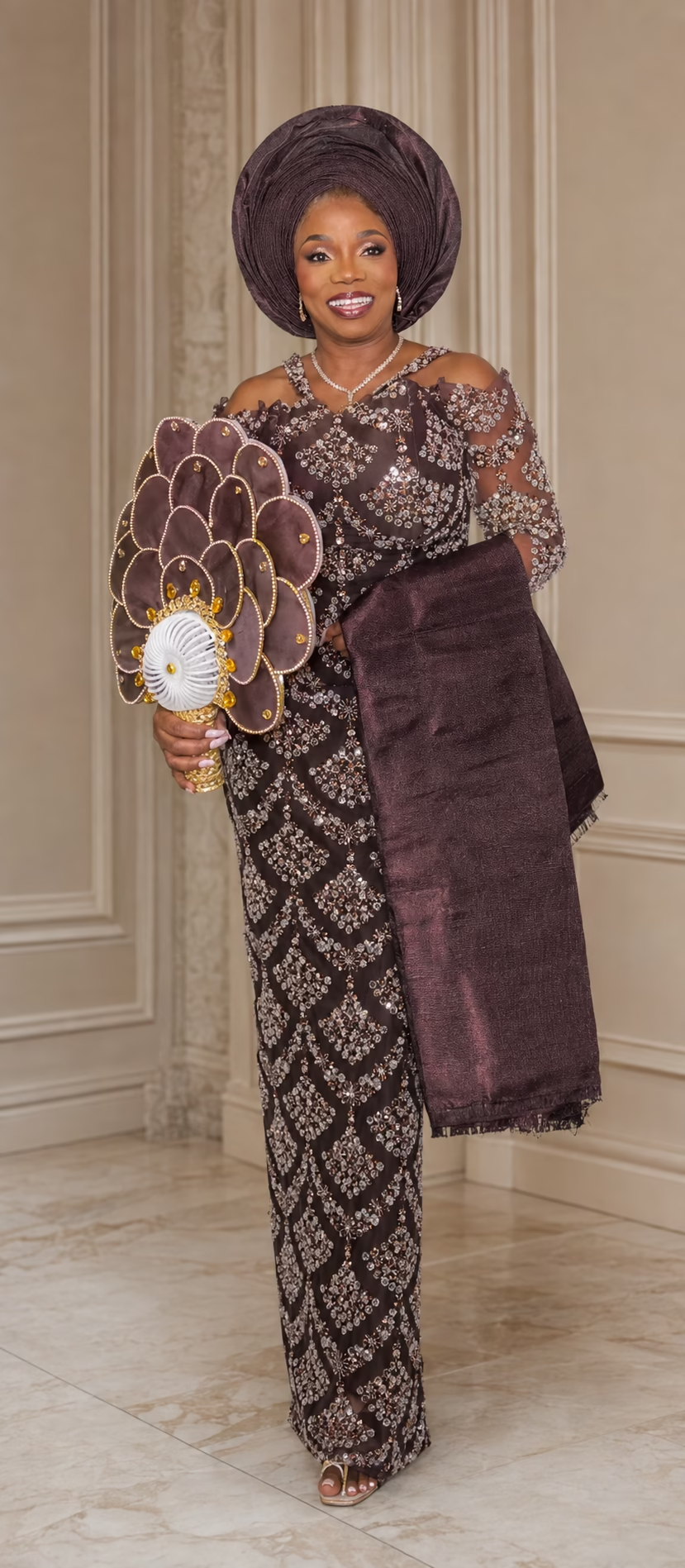
- Gele
- Contemporary designs incorporating traditional textiles
Modern African occasion wear also increasingly blends traditional craftsmanship with contemporary silhouettes.
The result can be something culturally meaningful without feeling dated.
What About Formal or Black Tie?
If the invitation says formal or black tie, approach the wedding as an elegant evening occasion.
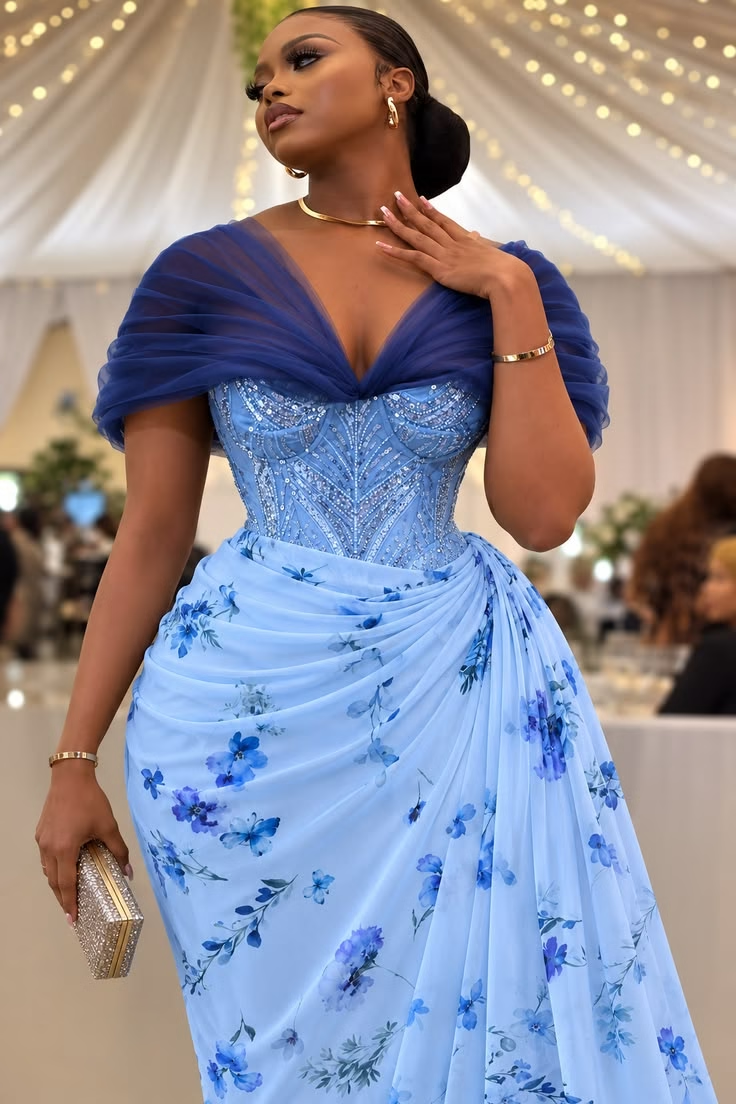
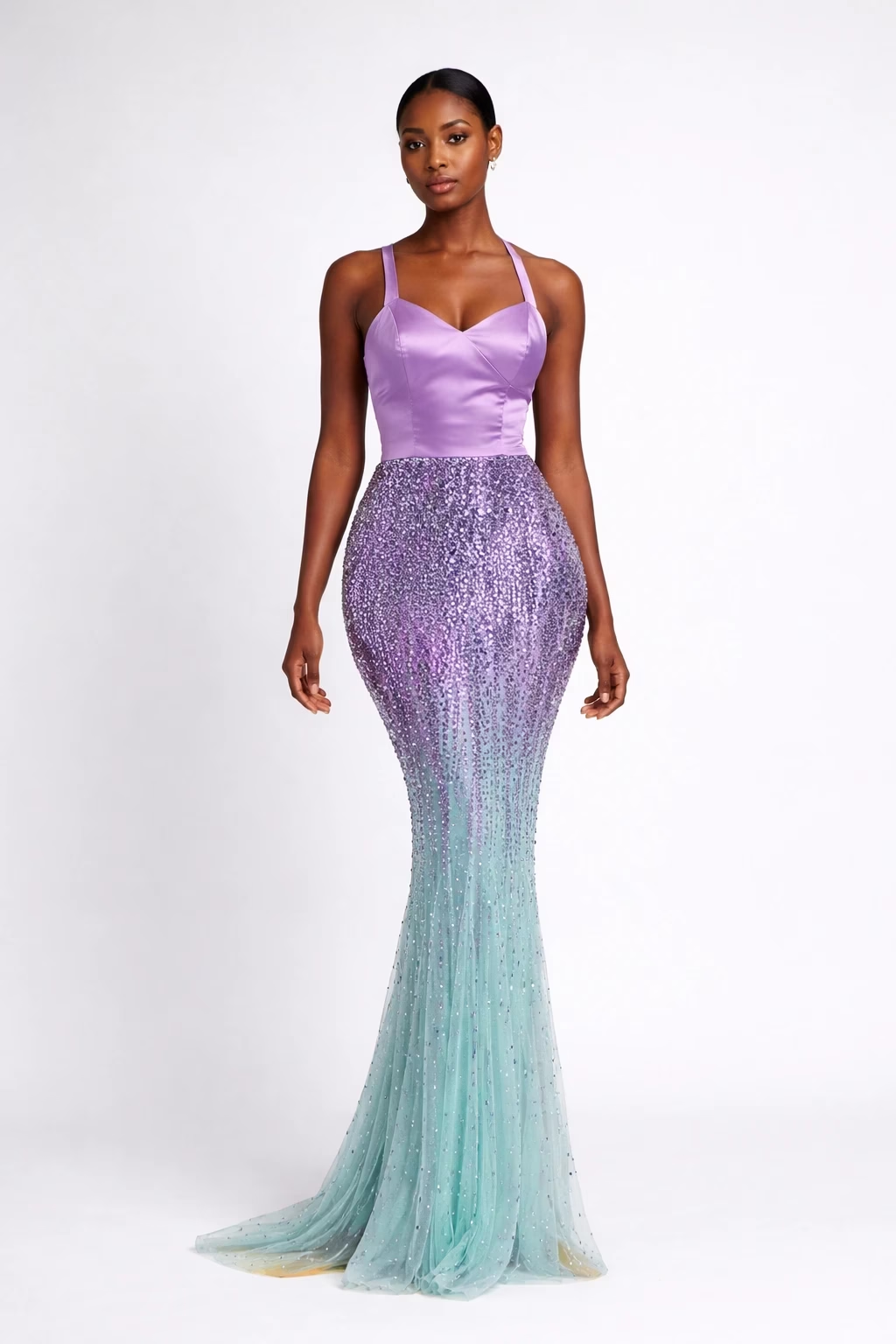
For women, this may mean a sophisticated floor-length gown, beautifully constructed midi dress or luxurious formal set.
For men, a well-tailored suit or tuxedo may be appropriate unless traditional attire has been requested.
Fabrics such as Mikado, silk, satin, velvet and embellished lace work particularly well for formal celebrations
What Should Women Wear to an African Wedding?
There are far more options than simply wearing a dress.
1. A Statement Dress
A beautifully made midi or maxi dress is a timeless wedding guest choice.
Look for thoughtful details such as:
- Sculptural sleeves
- Elegant draping
- Beautiful embroidery
- Interesting necklines
- Statement fabric
- Flattering structure
- Hand-finished embellishment
The aim isn’t necessarily to choose the loudest outfit in the room. A beautifully cut garment with one memorable detail can be just as striking.
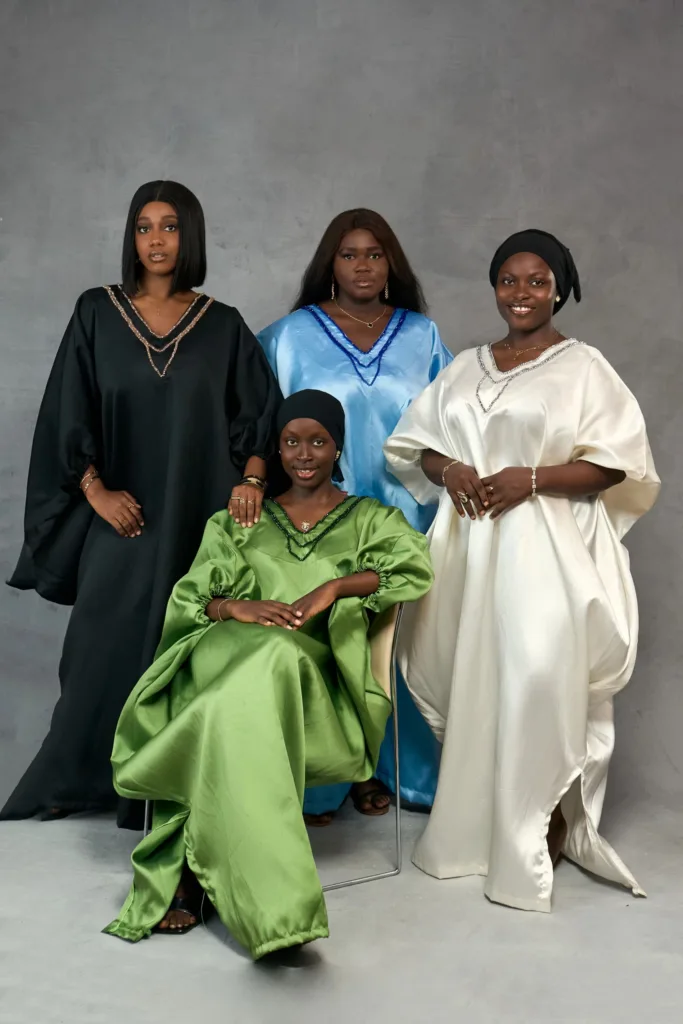
2. An Elegant Bùbù or Kaftan
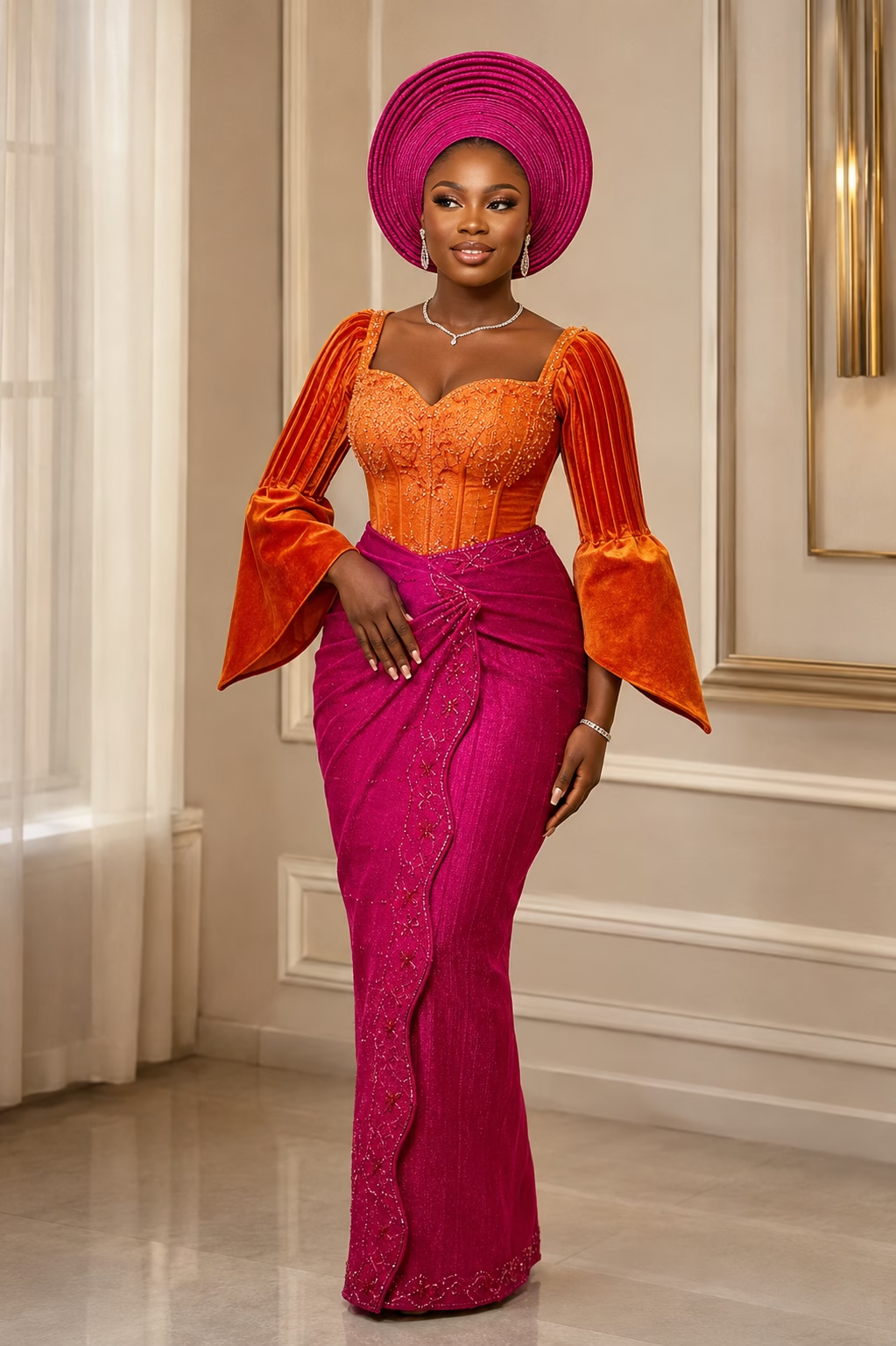
For effortless elegance, a beautifully constructed bùbù or kaftan can be an excellent choice.
The generous silhouette makes it comfortable for a long celebration, while beautiful fabric, embroidery or embellishment gives it occasion-worthy presence.
This is particularly useful for weddings where you’ll be moving between the ceremony, photographs, dinner and several hours on the dance floor.
For those who prefer a ready-to-wear option, the ÀṢẸ BÙBÚ from The Party Edit offers an elevated interpretation of this timeless silhouette.
3. Iro & Bùbá
Iro and bùbá remains an iconic Yoruba occasion look.
Today’s versions can range from traditional silhouettes to contemporary interpretations incorporating modern blouses, draping, unusual sleeves and different ways of tying the wrapper.
A beautiful gele can complete the look where appropriate.
4. Coordinated Sets
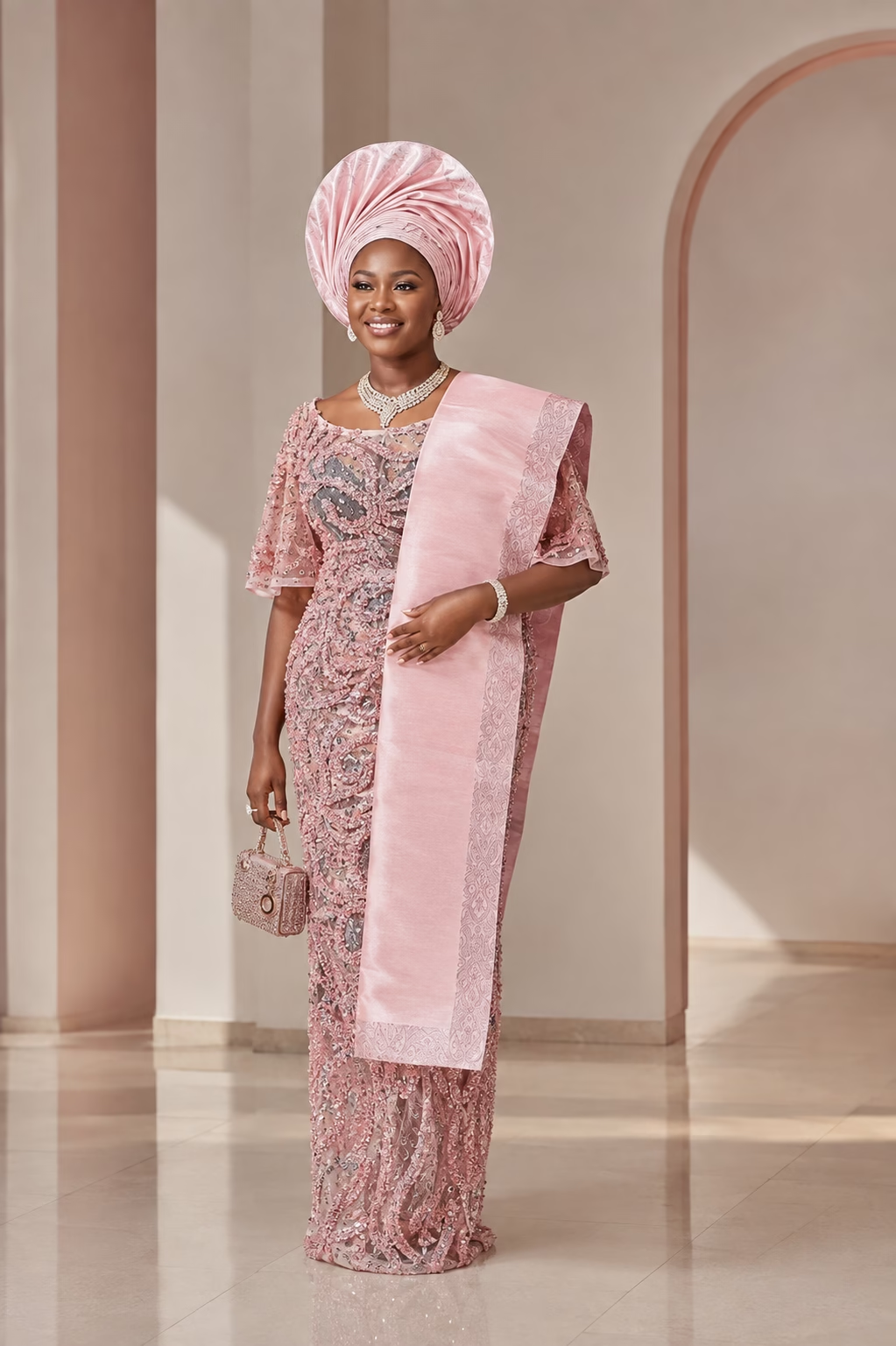
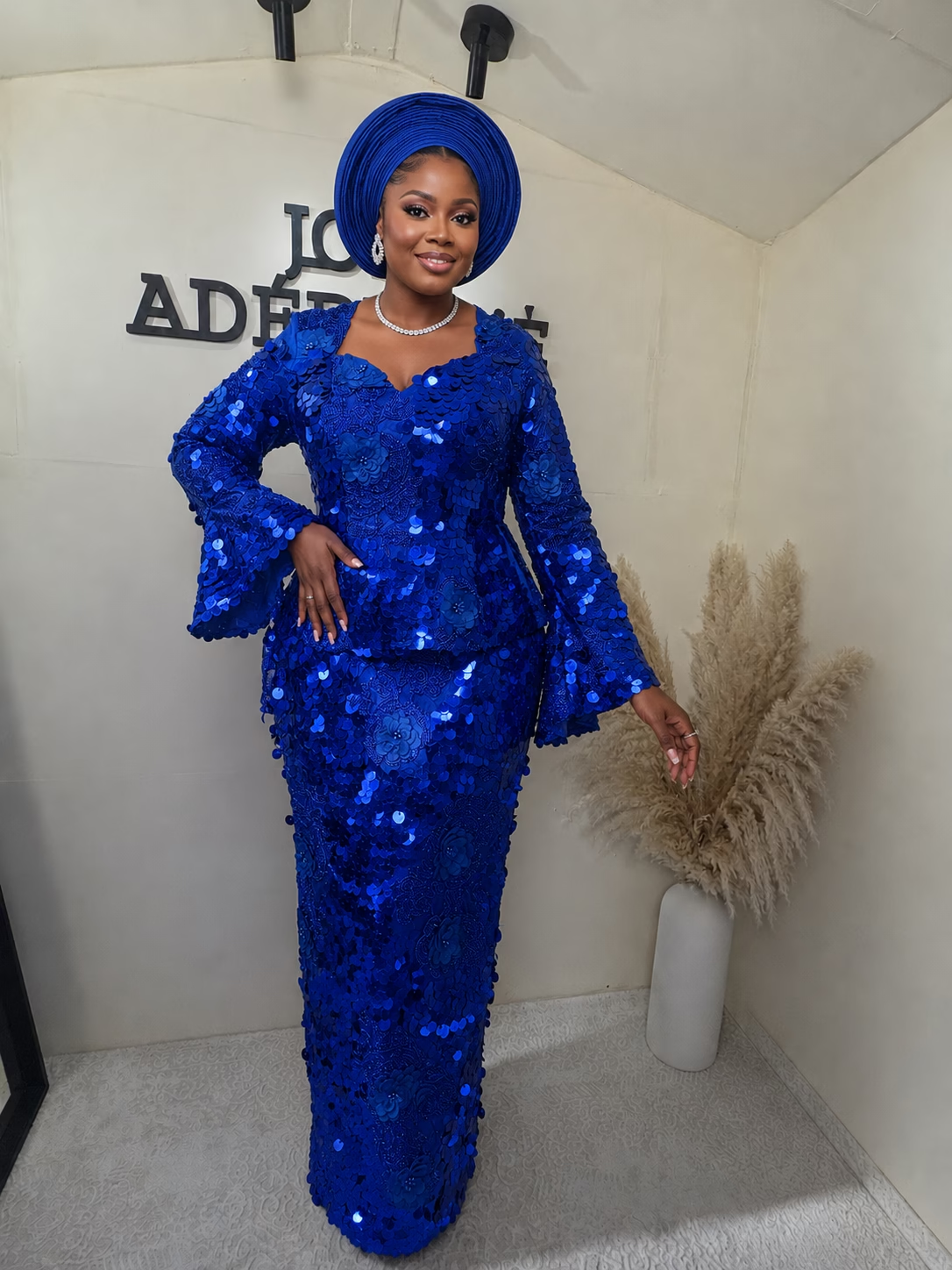
A coordinated set is an excellent alternative if dresses aren’t your style.
Think:
- Statement blouse + wide-leg trousers
- Elegant skirt + blouse
- Iro + contemporary top
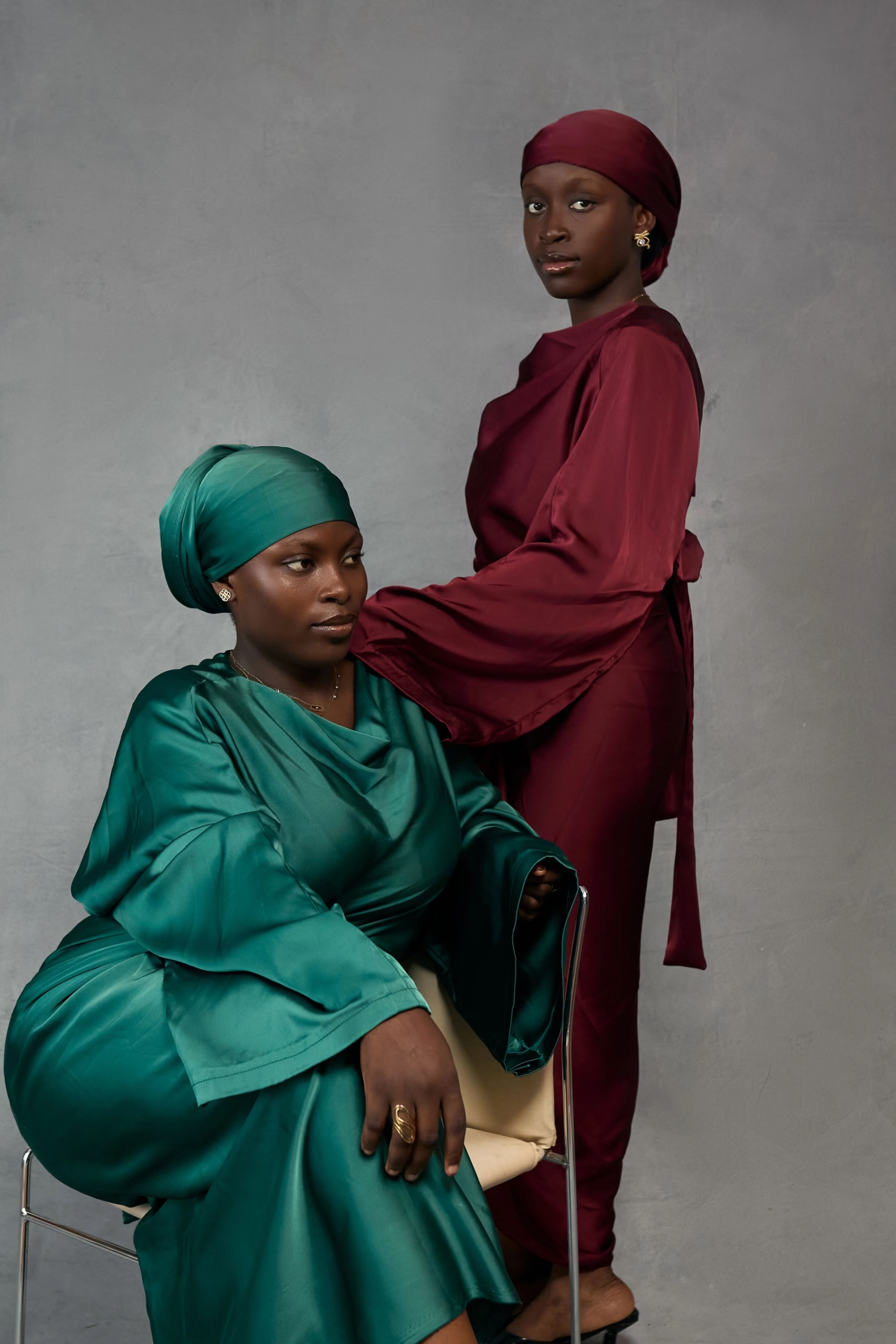
- Silk or satin co-ords
- Beautifully tailored separates
They’re modern, versatile and often easier to wear again after the wedding.
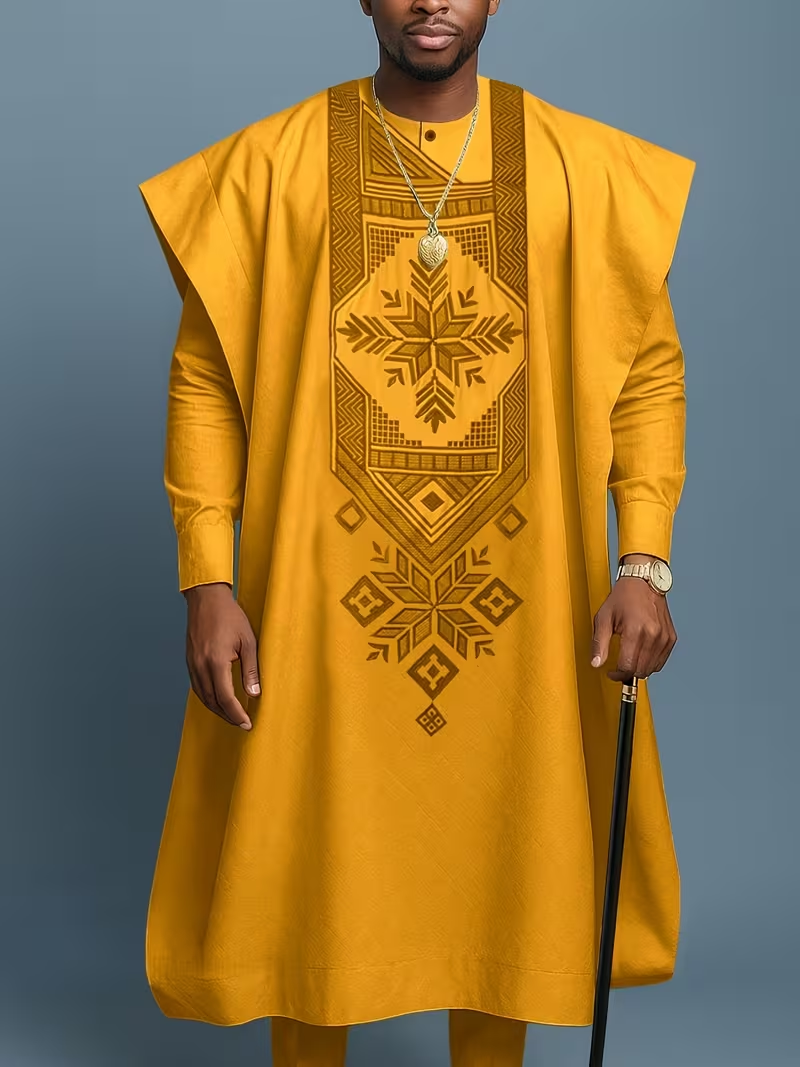
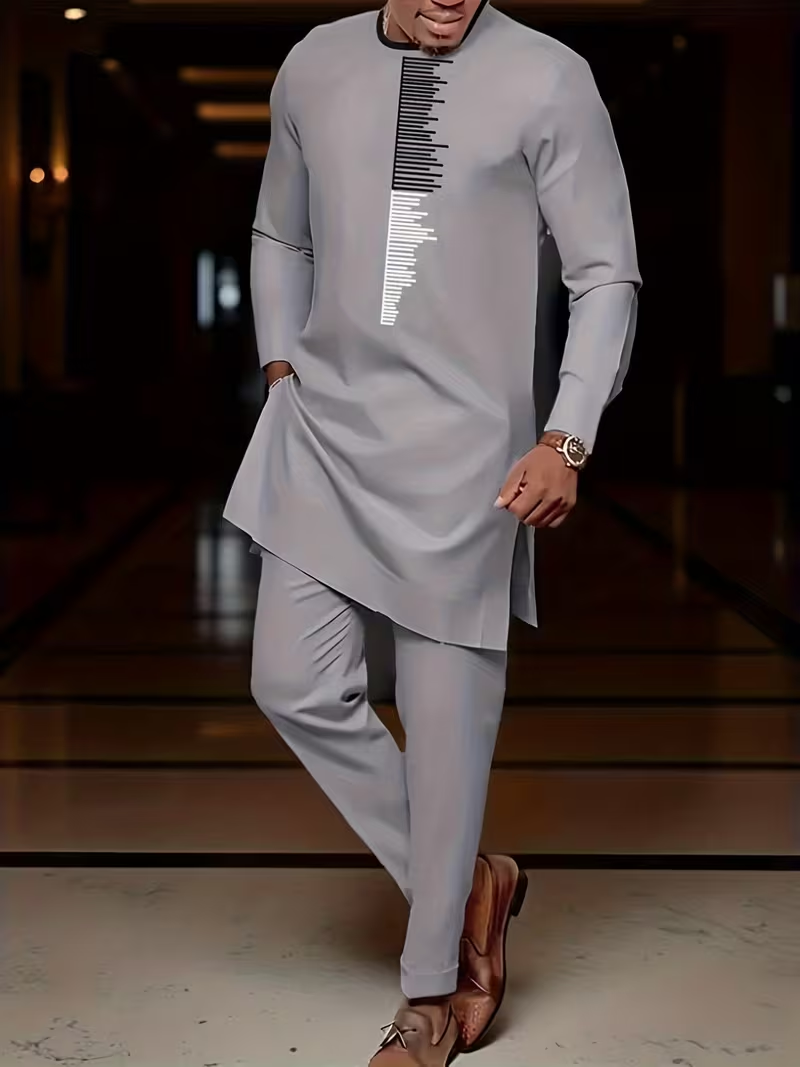
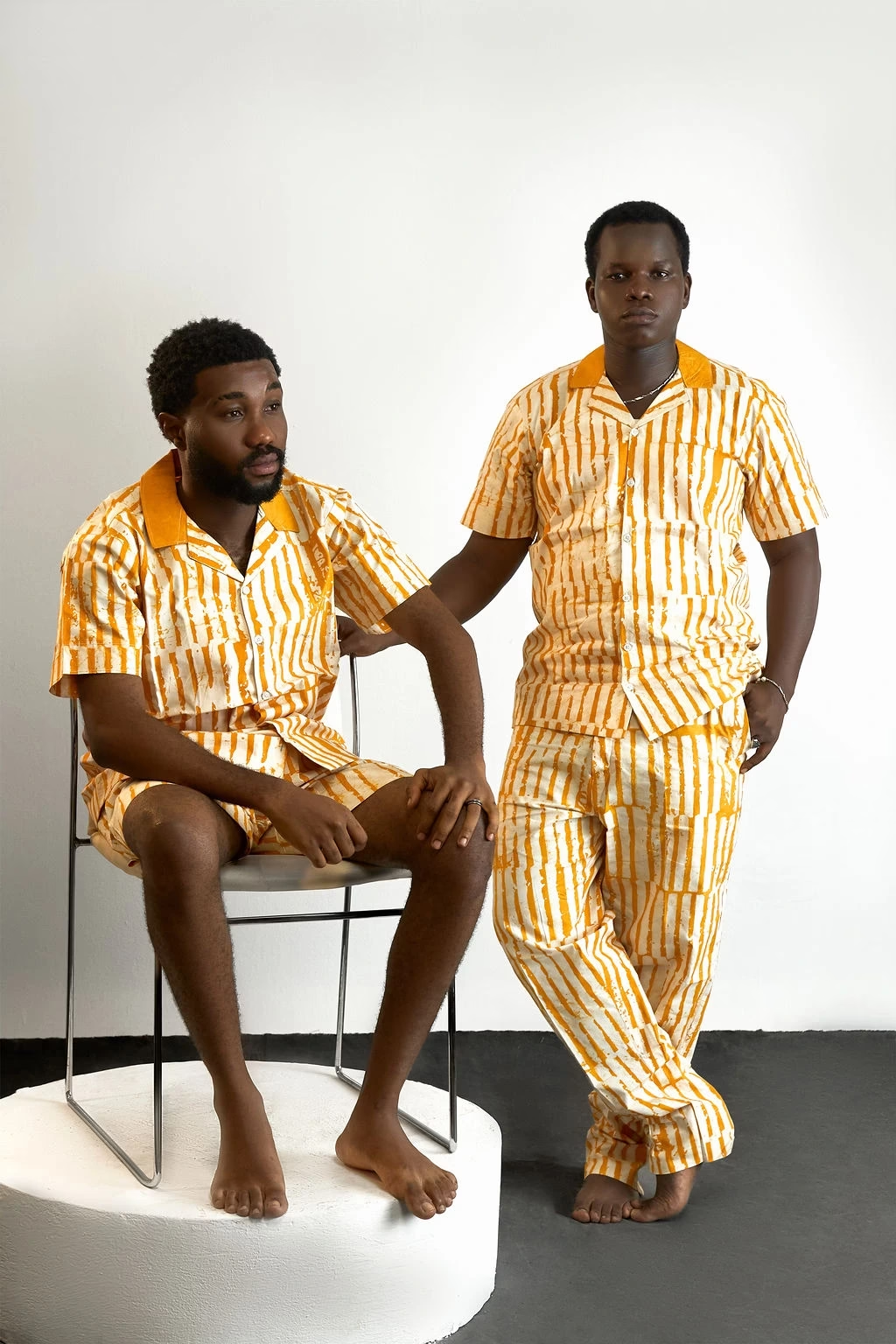
What Should Men Wear to an African Wedding?
Men have equally strong options.
Depending on the dress code, appropriate choices might include:
- Agbada
- Kaftan or senator-style attire
- Traditional coordinated sets
- A well-tailored suit
- Black tie
- Contemporary African-inspired menswear
If Aso Ebi or a specific colour has been selected, follow the couple’s guidance.
For a more relaxed celebration where traditional attire isn’t required, contemporary African tailoring can provide a polished middle ground between everyday smartwear and full ceremonial dress.
What Colours Should You Wear?
One of the joys of African wedding fashion is colour.
Depending on the dress code, beautiful choices include:
Emerald green · Royal blue · Burgundy · Wine · Fuchsia · Mustard · Burnt orange · Coral · Teal · Plum · Gold
Don’t be afraid of colour but always check the invitation first.
Some couples specifically choose wedding colours for guests, while particular shades may be reserved for members of the wedding party or family.
Can You Wear White?
Unless the couple has specifically requested an all-white dress code, I would generally avoid white, cream and very pale ivory as a wedding guest.
When in doubt, choose colour.
The Best Fabrics for an African Wedding
The fabric can be just as important as the silhouette.
Aṣọ̀-Òkè
Aṣọ̀-Òkè is a handwoven Yoruba textile traditionally associated with significant celebrations and ceremonial dressing.
Its texture and craftsmanship make it particularly beautiful for accessories, traditional outfits and statement details.
Coming to The JOLÁ Journal: What Is Aṣọ̀-Òkè?
Adire
Adire brings artistry and individuality to occasion wear through its distinctive resist-dyed patterns.
If you’d like to understand its origins, techniques and significance, we’ve explored it in detail in our first JOLÁ Journal guide:
Read: What Is Adire Fabric? Its History, Meaning & Why It Remains Timeless →
Ankara
Known for its distinctive prints and colour, Ankara can be transformed into everything from sculptural dresses to contemporary co-ords and statement accessories.
For weddings, tailoring and finishing make all the difference.
Lace
Lace remains particularly popular for Nigerian occasion wear and Aso Ebi.
Beading, embroidery and dimensional details can make even a relatively simple silhouette feel spectacular.
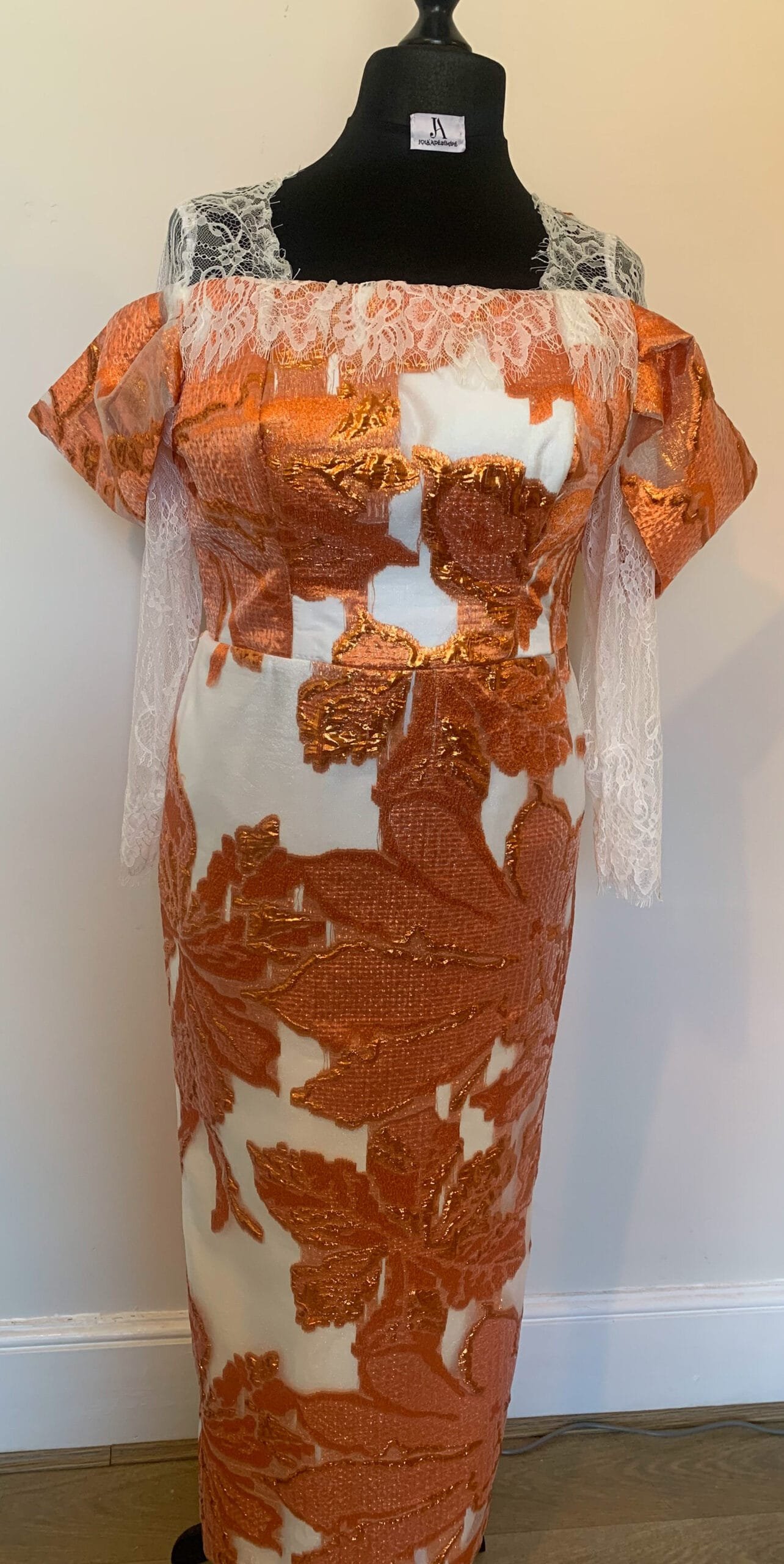
Silk, Satin & Mikado
These fabrics work beautifully for contemporary wedding guest fashion.
Silk and satin provide fluidity and movement, while Mikado offers the structure needed for dramatic sleeves and architectural silhouettes.
How to Accessorise an African Wedding Guest Outfit
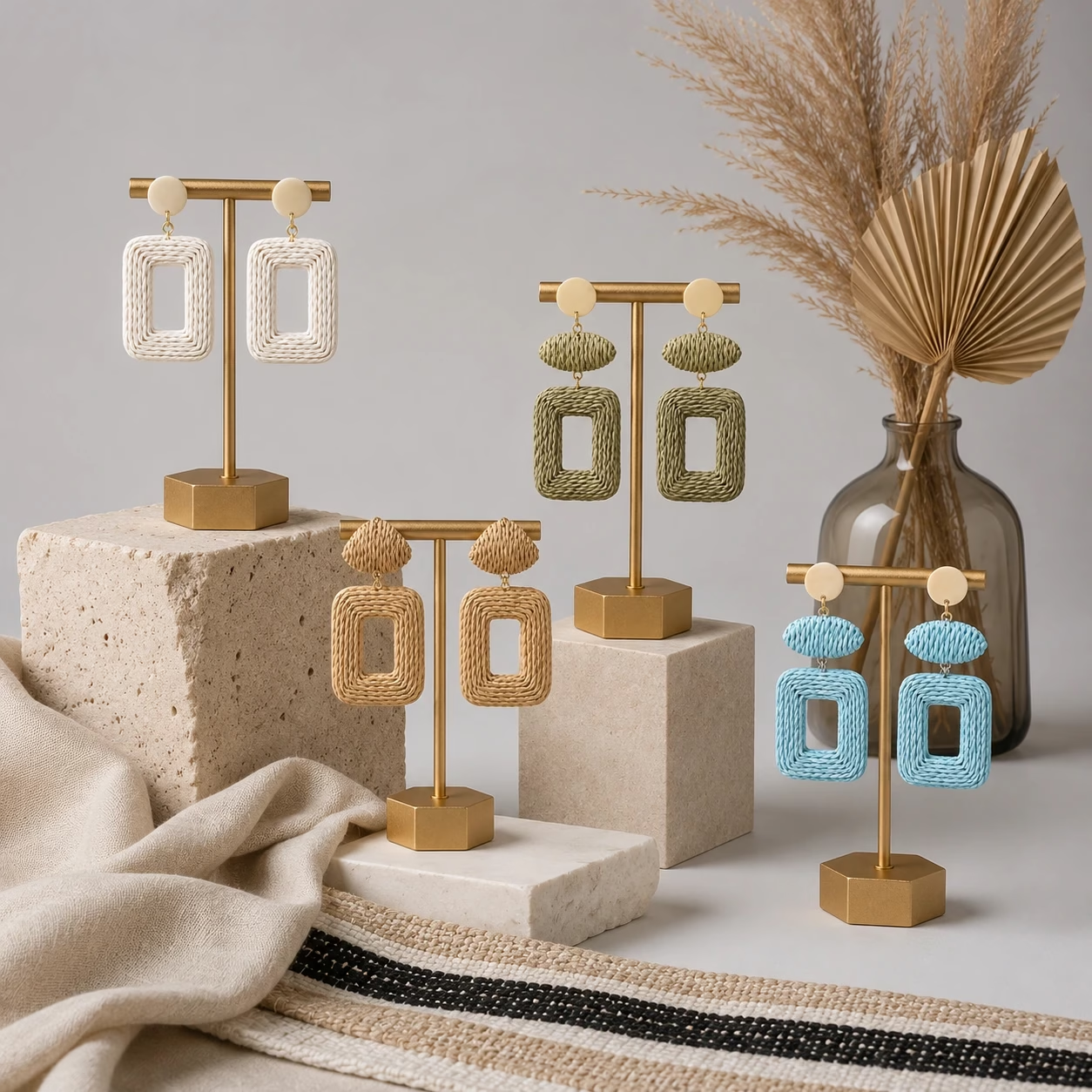
Accessories should complement your outfit rather than compete with it.
Depending on your look, consider:
- Statement earrings
- Gele or headwrap
- A structured clutch or mini bag
- Silk scarf
- Elegant heels
- Bangles or bracelets
- Statement necklace
- Aṣọ̀-Òkè accessories
If your garment is heavily embellished, you may need very little jewellery.
If the outfit itself is relatively understated, accessories are an opportunity to introduce colour, texture and personality.
Explore JOLÁ Accessories → | Discover the Wave Scarves →
What Shoes Should You Wear?
Never underestimate the length of an African wedding.
You may be standing during the ceremony, taking photographs, moving between venues and—most importantly—dancing.
Choose shoes that balance elegance with comfort.
Good options include:
- Block heels
- Elegant court shoes
- Dressy sandals
- Kitten heels
- Embellished flats
And there’s absolutely nothing wrong with having a more comfortable pair waiting for later in the evening.
Your feet will thank you.
What Should You Avoid Wearing to an African Wedding?
The couple’s invitation should always take priority, but there are a few useful general principles.
Avoid:
- White or bridal-looking outfits unless specifically requested.
- Ignoring a stated dress code or colour palette.
- Extremely casual clothing at a formal celebration.
- Wearing Aso Ebi intended for a particular group if you haven’t been invited to do so.
- Treating traditional clothing as a costume.
- Choosing an outfit so uncomfortable that you can’t enjoy the celebration.
Above all, dress with respect for the occasion and the people you’re there to celebrate.
What If You’ve Never Been to an African Wedding Before?
You don’t need to feel intimidated.
If you’re unfamiliar with a particular tradition, asking the couple or someone in the wedding party is completely reasonable.
You don’t have to imitate somebody else’s culture to participate respectfully.
Follow the dress code, choose something beautifully made that feels like you, and arrive ready to celebrate.
Bespoke or Ready-to-Wear: Which Should You Choose?
This often comes down to three things: time, individuality and fit.
Choose Bespoke If…
Bespoke may be right for you if:
- You’ve been given Aso Ebi fabric.
- You want something completely individual.
- You have a particular silhouette in mind.
- Fit is especially important to you.
- You’re attending a particularly significant celebration.
- You want to be involved in the design process.
Choose Ready-to-Wear If…
Ready-to-wear may be better if:
- The wedding is approaching quickly.
- You don’t want to attend fittings.
- You want to see the finished design before buying.
- You want something versatile enough to wear again.
- You prefer a simpler shopping experience.
This is exactly why we created The Party Edit occasion-ready pieces designed for those moments when the invitation arrives and you want something beautiful without starting a bespoke journey.
Frequently Asked Questions
Can Non-Africans Wear African Fashion to an African Wedding?
Yes, where appropriate.
If the couple has invited guests to wear traditional attire or a particular style, participating respectfully can be a wonderful way to celebrate with them.
If you’re uncertain about a culturally specific garment, ask your hosts rather than guessing.
Can I Wear Black to an African Wedding?
Usually, yes unless the invitation says otherwise.
Black can look incredibly elegant, particularly when paired with beautiful texture, embellishment, metallic accessories or a statement headpiece.
Do I Have to Wear a Gele?
No.
A gele can beautifully complete many Nigerian occasion looks, but it isn’t automatically required simply because you’re attending a Nigerian wedding.
Follow the dress code and choose what works with your outfit.
Can I Wear Trousers?
Absolutely.
Elegant wide-leg trousers, tailored co-ords and sophisticated jumpsuits can all work beautifully for weddings.
The key is ensuring the overall look feels appropriate for the formality of the celebration.
How Far in Advance Should I Arrange a Bespoke Wedding Guest Outfit?
As early as possible.
Bespoke garments require time for consultation, sourcing, construction and fittings. Lead times can also vary depending on the complexity of the design and the time of year.
If you have a wedding date in mind, it’s always better to enquire early.
Contact JOLÁ ADÉBÍMÍPÈ About Bespoke →
Final Thoughts
Dressing for an African wedding isn’t about wearing the biggest outfit in the room.
It’s about understanding the celebration you’ve been invited to, respecting its traditions and choosing something that makes you feel beautifully yourself.
That might mean a dramatic Aso Ebi gown created especially for you.
It might mean iro and bùbá.
It could be a flowing bùbù, beautifully tailored trousers, a contemporary dress or an elegant ready-to-wear piece you know you’ll wear again.
Whatever you choose, let the invitation guide you and allow your personal style to do the rest.
Your Invitation Has Arrived. Now Find the Look.
At JOLÁ ADÉBÍMÍPÈ, we believe dressing for a celebration should feel just as special as the occasion itself.
Our bespoke service creates individual occasion wear around you, while The Party Edit offers beautifully designed ready-to-wear pieces for weddings, owambes, birthdays, thanksgiving celebrations and the special moments in between.
Wear Grace. Made Bold.